This comparison is built from live pricing pages for Amplitude and FullStory, checked this month, along with G2’s own comparison data. Where third-party sources disagreed, the vendor’s own pricing page was treated as the source of truth.
Amplitude counts what you tell it to track. FullStory shows you everything that happened, whether you tagged it or not. That single difference decides which tool actually fits your team, and it’s easy to underestimate how much it matters until you’re six months into the wrong one.
Most teams researching this comparison already have a specific problem in mind. Maybe conversion dropped and nobody can pinpoint why. Maybe a redesign needs visual proof before it gets approved. Maybe the team just wants clean funnels and retention data without hiring a dedicated analyst to maintain it. Amplitude and FullStory solve different versions of that problem, and neither one is a weaker copy of the other. This breakdown compares both on real feature depth, live pricing, and what actual users report after they’ve paid the renewal invoice, not just what the marketing pages promise.
Amplitude is the better pick for product and data teams that need quantitative analytics, experimentation, and predictable self-serve pricing. FullStory is the better pick for UX and support teams that need to see exactly what a user did, without instrumenting every event first.
- Best overall: Amplitude, for its broader feature set and transparent pricing
- Best for individuals and small teams: Amplitude, with a genuine free tier and no time limit
- Best for teams: FullStory for UX and support-heavy teams that live in session replay; Amplitude for product and data teams that need cohorts, funnels, and experimentation
- Key differentiator: Amplitude is event-first, built to measure what you plan to track. FullStory captures everything by default, so nothing gets missed even if it was never tagged.
Amplitude vs FullStory: What’s the Real Difference?
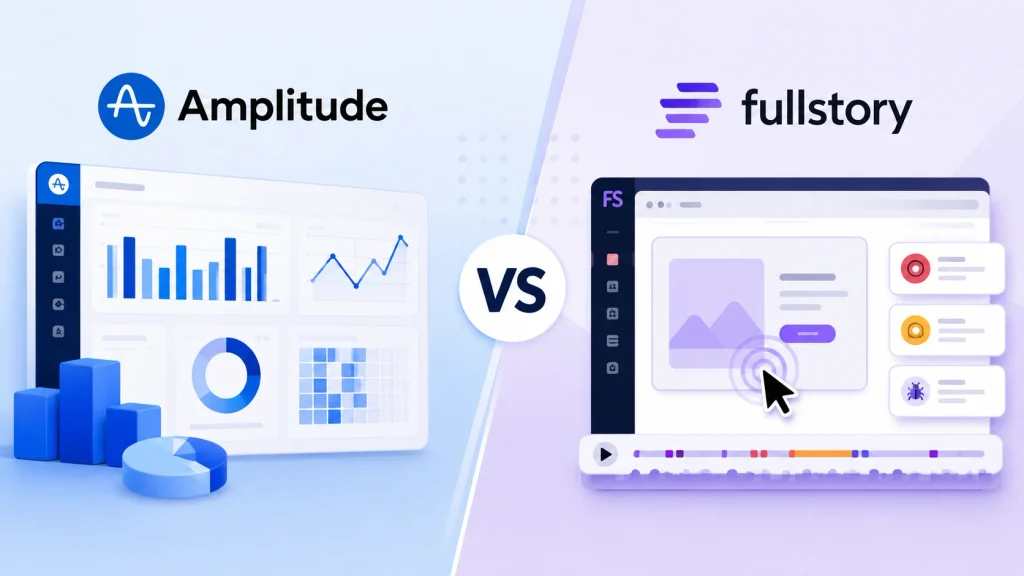
Both tools help teams understand user behavior, but they start from opposite assumptions.
Amplitude is an event-first analytics platform. You define the events that matter (funnels, retention, cohorts), and Amplitude turns that structured data into dashboards, causal insights, and predictive analysis. The quality of what you get out depends heavily on how well your team maintains its tagging.
FullStory takes the opposite approach. It auto-captures every session by default, including clicks, rage clicks, dead clicks, and errors, without requiring you to define anything in advance. That means you can go back and investigate a problem that happened last week, even if you never planned to track it.
Amplitude trades setup effort for measurement precision. FullStory trades precision for coverage you didn’t have to plan.
Feature Comparison That Actually Matters
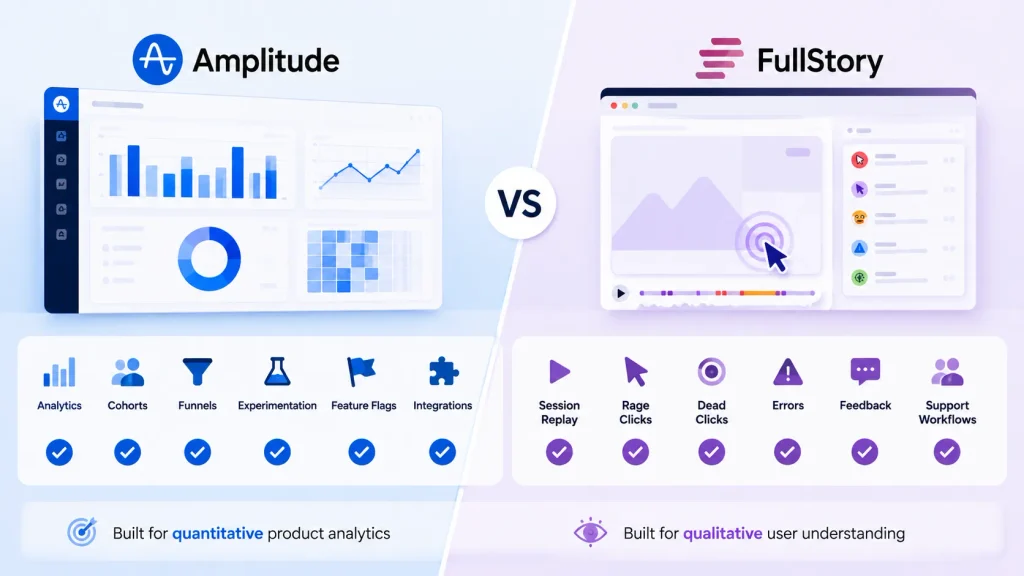
| Category | Winner | Why? |
|---|---|---|
| Data depth and performance | Amplitude | Event-based architecture built for large-scale quantitative analysis, with a broader range of analytics capabilities than session-replay-first tools |
| Session replay quality | FullStory | Replay is the entire product, not a bolted-on feature, with stronger search and filtering across recordings |
| AI capabilities | Tie | Amplitude AI summarizes behavioral data and powers agent analytics; FullStory’s StoryAI, built on Gemini, auto-summarizes sessions and is expanding into agentic session investigation |
| Integrations | Amplitude | Larger ecosystem leaning toward analytics and data-warehouse tools, plus native MCP support for AI tools like Claude and Cursor |
| Ease of use and setup | FullStory | Scores higher on G2 for ease of setup, largely because auto-capture skips the instrumentation-planning step Amplitude requires |
| Collaboration | Amplitude | Deeper permissioning, spaces, dashboard subscriptions, and cross-functional workflow tooling |
| Automation and experimentation | Amplitude | Native feature flags, A/B/n testing, and web experimentation are full products inside the platform; FullStory has no equivalent |
| Platform support | Tie | Both cover web and mobile SDKs, with ongoing investment on each side |
Data depth and performance
Amplitude’s event architecture is built to hold up at scale. Cohorts, funnels, and retention curves stay fast and reliable even as event volume grows into the tens of millions, which is why data-heavy product teams default to it.
Session replay quality
FullStory built its platform around session replay instead of adding it as a feature. Recordings are searchable and filterable at a level Amplitude doesn’t match, since replay sits alongside analytics as one feature among many rather than the core product.
AI capabilities
Amplitude AI summarizes behavioral trends and powers agent analytics across your event data, while FullStory’s StoryAI, running on Google’s Gemini model, auto-summarizes individual sessions and is expanding into agentic investigation. The two solve different jobs: one models patterns across your whole user base, the other explains a single session fast.
Integrations
Amplitude’s ecosystem leans toward analytics and data-warehouse tooling, and it connects directly to AI tools like Claude and Cursor through MCP so teams can query product data without switching apps. FullStory integrates well too, but its catalog leans more toward support and CX platforms like Zendesk and Intercom.
Ease of use and setup
FullStory wins here mostly by default. Auto-capture means there’s no taxonomy to plan before you start seeing data, which is why it scores higher on G2’s ease-of-setup metric. Amplitude asks more of you upfront, since defining a clean event taxonomy takes real planning before dashboards become trustworthy.
Collaboration
Amplitude offers deeper permissioning, shared spaces, and dashboard subscriptions built for cross-functional teams working off the same data. FullStory’s collaboration tools exist but are lighter, built more around sharing individual session links than managing team-wide workflows.
Automation and experimentation
This is where the gap is widest. Amplitude includes native feature flags, A/B/n testing, and web experimentation as full products inside the same platform as analytics. FullStory has no equivalent, so teams that want to test and analyze in one place lean toward Amplitude here.
Platform support
Both platforms cover web and mobile SDKs, with active investment on each side. Neither has a clear edge here; the difference comes down to how each team plans to use the data day to day rather than a platform gap.
Pricing Breakdown (Hidden Costs Included)
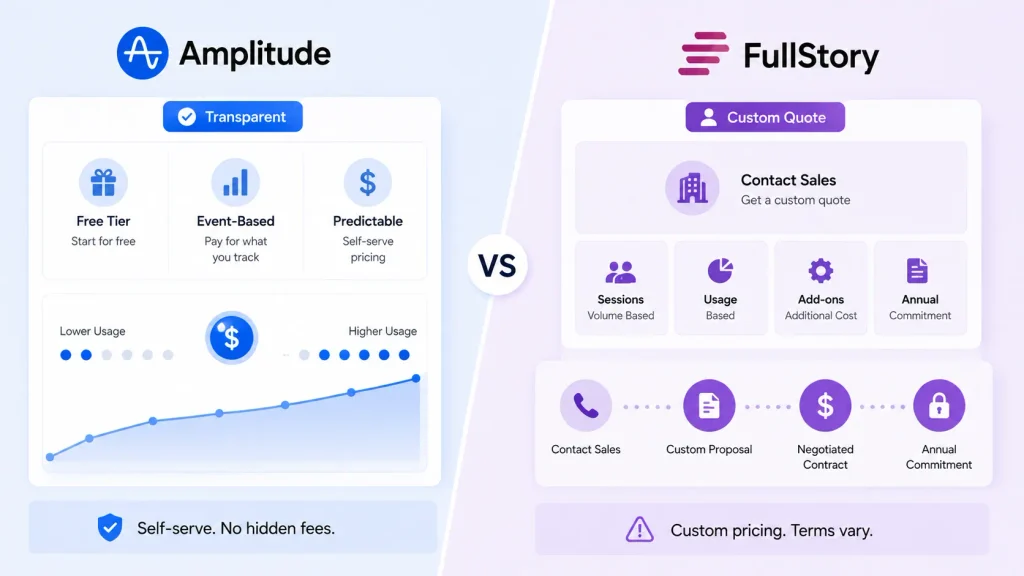
Amplitude pricing, what you really get?
Amplitude publishes its pricing directly, which is rare in this category.
- Free: 2 million events per month, forever, no credit card required. Includes the full platform: analytics, session replay, feature flags, web experimentation, guides and surveys, and AI Agents.
- Plus: Starts at $0 with the first 2M events/month free, then scales with event volume. A credit card is required once you exceed the free tier. Published list pricing starts at $49/month, billed annually, for up to 1,000 MTUs, scaling to 300,000 MTUs (25M events) before requiring a Growth or Enterprise contract.
- Growth: Custom, event-based pricing via sales. Adds advanced behavioral exploration, monitoring and alerts, SSO, and project permissions.
- Enterprise: Custom, event-based pricing. Adds unlimited projects, data access controls, and RBAC.
- Real contract data: Enterprise deals for 500K to 1M+ MTUs typically run $100,000 to $250,000+ annually, with multi-year commitments driving discounts of 20 to 35% off the initial quote.
FullStory pricing, what you really get?
FullStory publishes no list pricing above the free tier. Every number comes from a sales conversation.
- FullStoryFree: A permanent free tier with 30,000 sessions per month, 12 months of data retention, and up to 10 user seats. No credit card required, confirmed directly on FullStory’s plans page.
- Business: Entry paid tier, quote only. Small teams on 50,000 to 100,000 sessions/month commonly pay $10,000 to $25,000 per year, with lower pricing going to teams that prepay annually.
- Advanced: Mid-tier, adds StoryAI Session Summaries and deeper retention and journey analysis.
- Enterprise: Custom-quoted. Industry benchmarking puts the average Enterprise contract around $80,000 annually, trending upward year over year.
- Median contract: Independent procurement data puts the median FullStory buyer at roughly $27,872 per year, with an average negotiated discount of 19% off the initial quote.
Which tool offers better value?
For teams that want to see cost before talking to anyone, Amplitude wins outright. Its free tier and self-serve Plus plan let you estimate spend without a sales call. FullStory requires a quote at every paid tier, which makes budgeting harder even if the eventual price is competitive. Teams with heavy replay needs and the negotiating leverage to push back on renewal pricing may still find FullStory worth the trade-off.
Real User Experience (Pros and Cons)
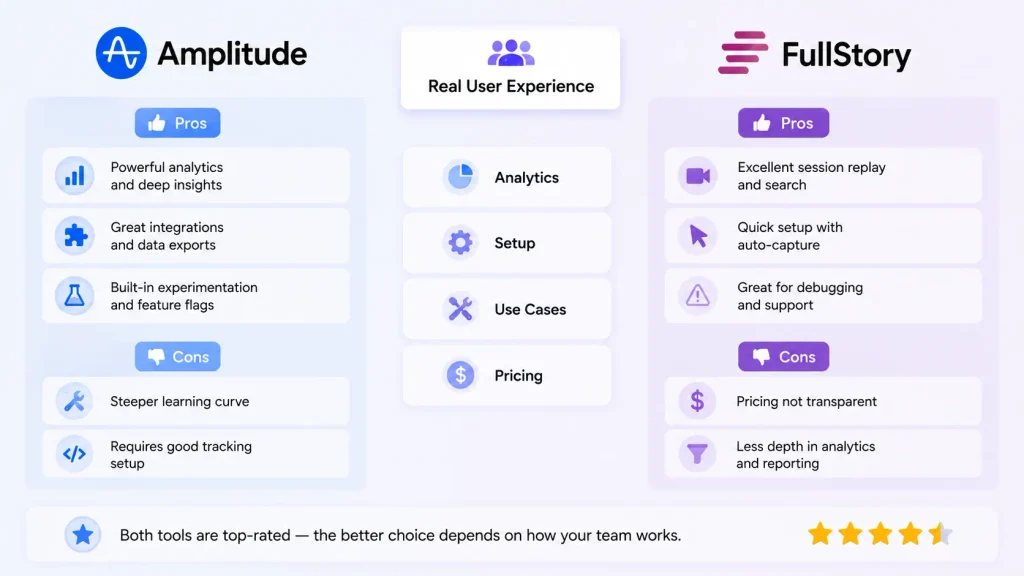
G2’s own comparison data shows Amplitude scoring 8.5 on Meets Requirements across 2,079 reviews, against FullStory’s 8.7 across 887 reviews. FullStory edges ahead on Ease of Setup, 8.4 versus 7.9, while Amplitude leads slightly on Ease of Use, 8.3 versus 8.2.
Amplitude Pros and Cons
Pros:
- Broad, precise analytics capabilities that reviewers consistently praise for clickstream and action tracking
- User-friendly interface that makes complex data approachable
- Native experimentation and feature flagging inside the same platform
Cons:
- High prices are one of the most repeated complaints among G2 reviewers
- Not mobile-first, which shows up as a gap for mobile-heavy product teams
- Most common complaint: data quality depends on how disciplined the team stays with event tagging over time
FullStory Pros and Cons
Pros:
- Strong, responsive customer support that reviewers call out specifically
- Session replay that reconstructs the full digital experience, not just isolated metrics
- Fast time-to-first-insight since nothing needs to be tagged in advance
Cons:
- Session limits can silently throttle data collection; FullStory pauses recording by default once you hit your cap
- No public pricing at any paid tier makes budgeting harder than it needs to be
- Most common complaint: renewal pricing has surprised customers, with one reviewer reporting a price increase of more than 2x at renewal
When You Should Choose Amplitude?
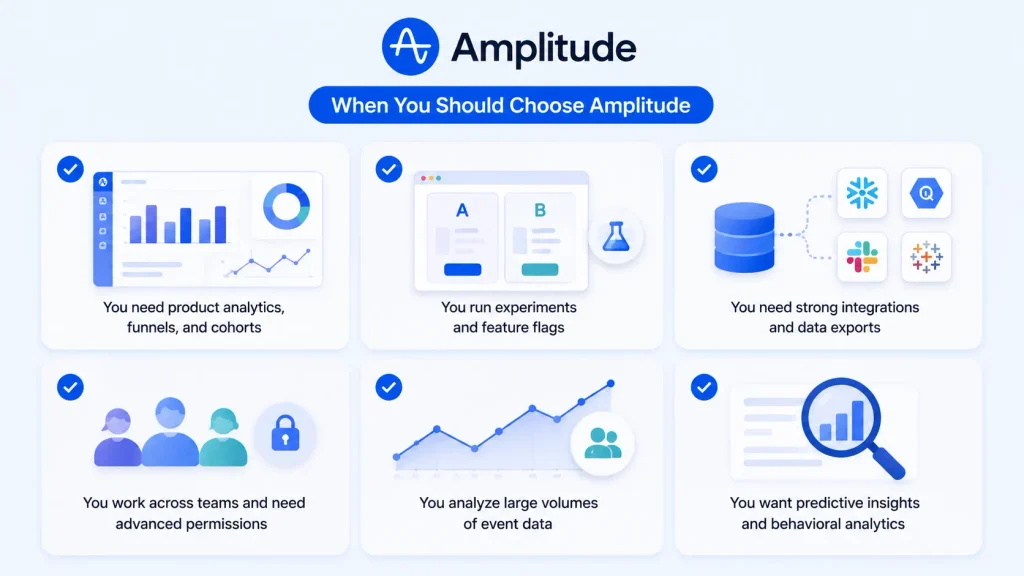
- You need cohort-based retention and funnel analysis across a large, defined event taxonomy
- Your team runs feature flags and A/B tests and wants that native in the same tool as analytics
- You’re an early-stage team that wants zero cost until you scale past 2M events/month
- Product and data teams need to self-serve dashboards without pinging engineering
- Budget predictability matters and you want to see pricing before a sales call
- Cross-functional reporting across marketing, product, and data is a priority
When You Should Choose FullStory?
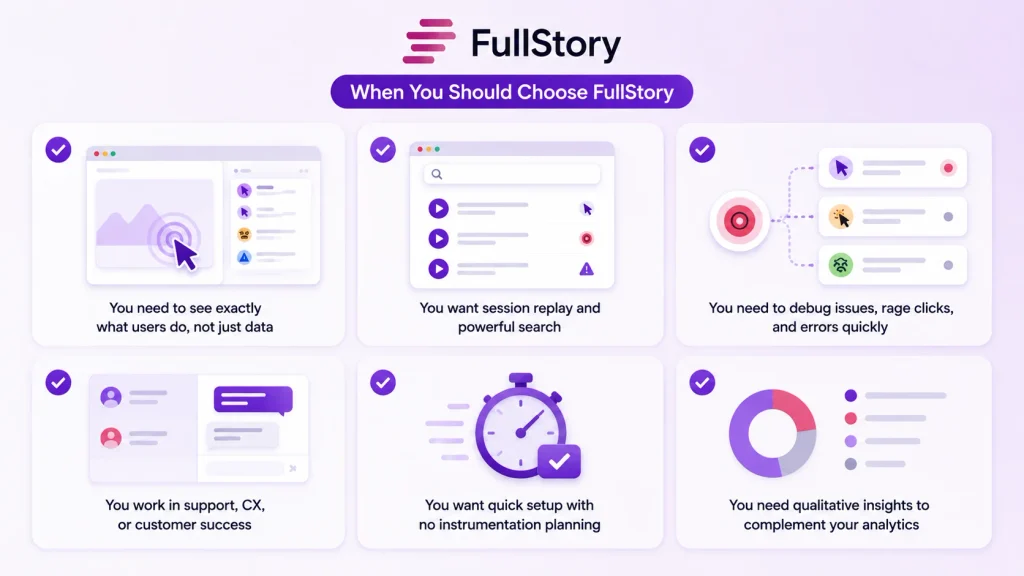
- You need to see exactly what a user did during a failed checkout or support ticket, not just that it happened
- Your team lacks the engineering bandwidth to instrument every event manually
- UX and design teams need visual evidence to justify a redesign
- You’re debugging rage clicks, dead clicks, or JS errors in production
- Support and CX teams need session context tied directly to tickets
- You want the fastest possible time-to-first-insight with minimal setup
When Neither Tool Is the Right Choice?
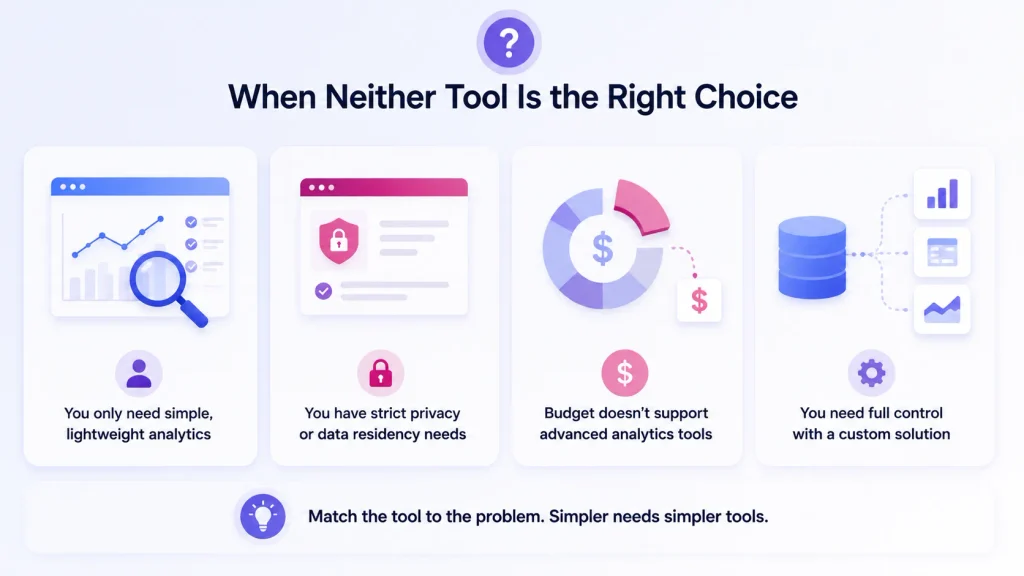
If you’re a solo founder or a very early team that just needs something free and simple, both tools carry more complexity than you need. Lighter options like Microsoft Clarity or PostHog’s free tier cover basic replay and analytics without the setup overhead.
If dedicated mobile-app behavioral analytics is your primary need, neither platform is purpose-built for that use case the way a mobile-first analytics tool would be.
Hidden Limitations Most Blogs Ignore
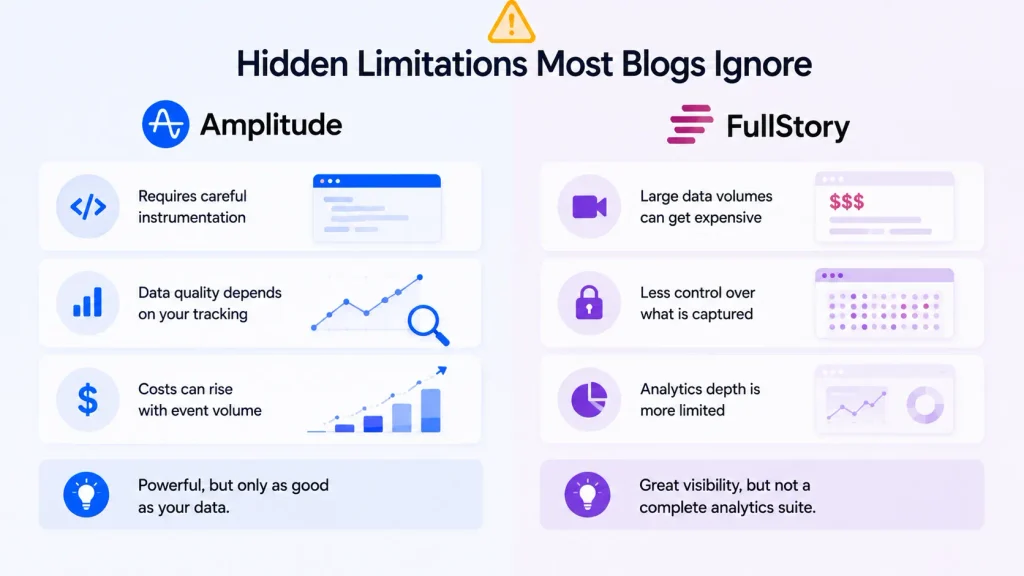
- FullStory’s pricing is opaque by design. No paid tier publishes a number, and renewal increases are a recurring complaint pattern across reviews.
- Amplitude’s “free forever” claim has a real catch. It’s not a trial, but a credit card becomes required the moment you need custom events or move past 2M events/month.
- FullStory pauses recording by default once you hit your session limit, which can silently create coverage gaps mid-month if usage isn’t monitored. An optional overage feature exists but has to be turned on deliberately.
- Amplitude’s Growth and Enterprise pricing scales unpredictably at volume. What looks affordable on the public pricing page can turn into a $100,000+ annual contract at real enterprise scale.
- FullStory’s November 2025 acquisition of Usetiful added Guides and Surveys as a quote-only add-on, another cost that doesn’t show up until you’re already deep in a sales conversation.
Can You Use Amplitude and FullStory Together?
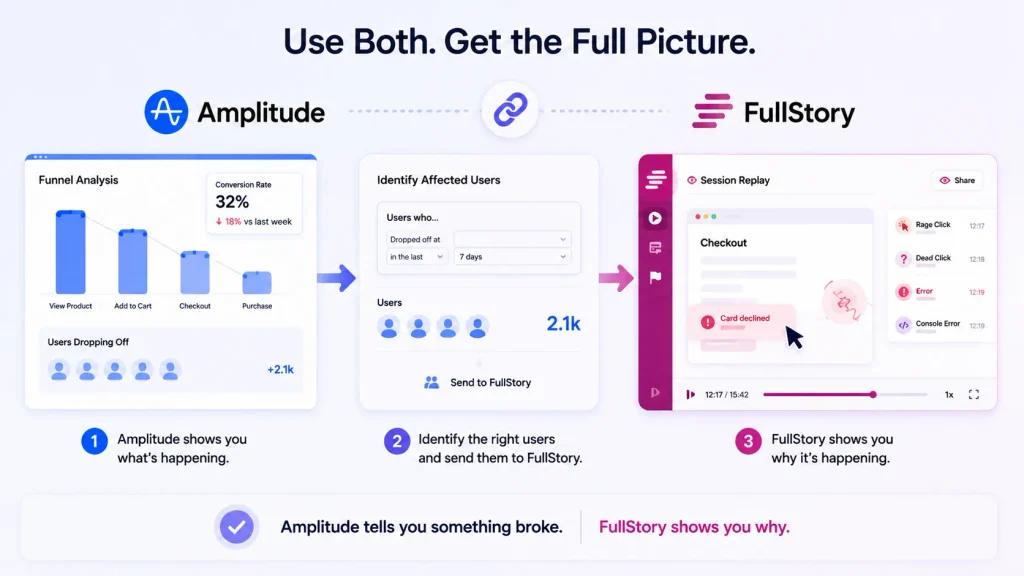
Many serious product teams don’t choose one, they run both. The pattern shows up repeatedly across practitioner discussions: spot a drop in conversion using Amplitude’s funnels and cohorts, then pinpoint the exact cause by watching the affected sessions in FullStory.
Amplitude tells you something broke. FullStory shows you why. Together they close the loop between quantitative signal and qualitative cause, faster than trying to force one tool to do both jobs.
Frequently Asked Questions
Is Amplitude or FullStory better for startups?
Amplitude, mainly on cost. Its free tier includes 2 million events per month with no time limit and no credit card, while FullStory requires a sales quote at every paid tier, even for small teams. Confirm current pricing on each tool’s official site before deciding.
Can you use Amplitude and FullStory together?
Yes, and many product teams do. Amplitude identifies where and when a metric drops, and FullStory lets you watch the actual sessions from that segment to understand why.
Does FullStory have a free plan?
Yes, called FullStoryFree. It includes 30,000 sessions per month, 12 months of data retention, and up to 10 user seats, with no credit card required. It’s more limited on features than Amplitude’s free tier, which includes the full platform up to 2 million events monthly.
How much does Amplitude cost at scale?
At high volume, Amplitude’s Growth and Enterprise plans are custom-quoted based on event volume. Real enterprise contracts for 500K to 1M+ monthly tracked users typically range from $100,000 to $250,000 annually. Confirm current pricing directly with Amplitude sales.
Which tool is easier to set up with no engineering help?
FullStory. Its auto-capture model records everything by default, so there’s no event taxonomy to plan before you start seeing data, which is reflected in its higher G2 ease-of-setup score.
Does Amplitude offer session replay like FullStory?
Yes, but it’s secondary. Amplitude includes session replay across all its plans, but it’s one feature among many rather than the core product. FullStory’s replay is deeper and more central to how the platform is used day to day.
Final Verdict: Which One Should You Choose?
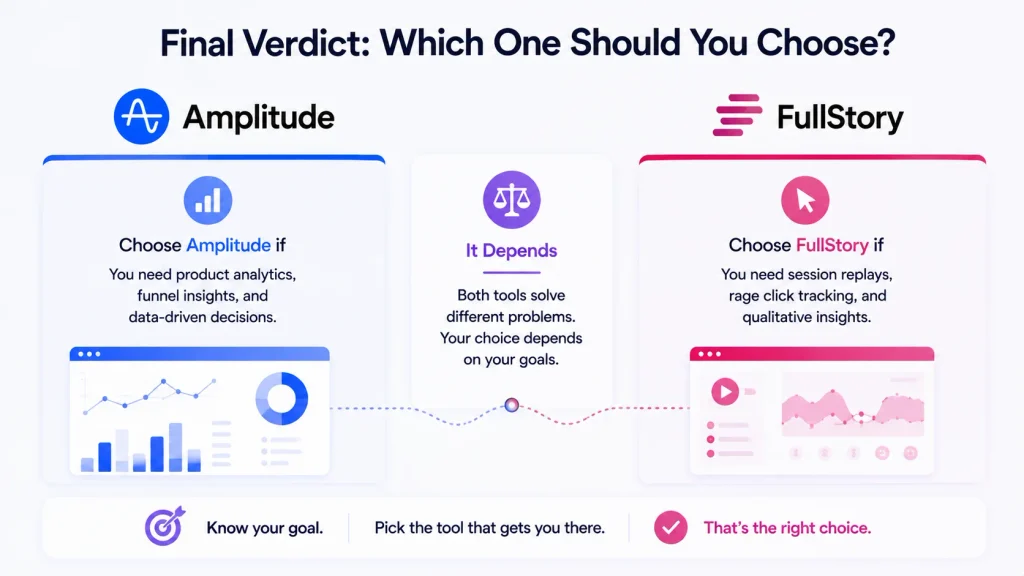
Choose Amplitude if you need quantitative product analytics, native experimentation, and pricing you can plan around before talking to sales. Choose FullStory if session replay and fast, no-instrumentation setup matter more than aggregate trend analysis.
- Best overall: Amplitude
- Best for individuals: Amplitude, with its no-cost, no-time-limit free tier
- Best for teams: FullStory for UX and support-heavy teams; Amplitude for product and data-heavy teams
If you’re a data-driven product team that wants to see pricing upfront and build experimentation into the same workflow as analytics, Amplitude is the safer default.