


AI writing has moved past the novelty phase. A few years ago, generating decent marketing copy with a button click felt like magic. Today, it’s baseline table stakes.
Copy.ai dominated the early market because it made GPT-3 accessible through intuitive templates. It solved the blank page problem for thousands of marketers. But as AI models have matured, the needs of founders, agencies, and content teams have shifted from simple “copy generation” to complex workflows, factual accuracy, and brand-specific reasoning.
Users aren’t just looking for a tool to spit out Instagram captions anymore. They need platforms that can handle long-form research, maintain a distinct brand voice across thousands of words, and integrate directly into SEO workflows.
This guide evaluates the top alternatives to Copy.ai based on real-world utility, not feature lists. We look at where they excel, where they break, and which specific use case each tool serves best.
What Makes a Good Copy.ai Alternative in 2026?
Replacing a tool like Copy.ai isn’t just about finding another interface for an LLM (Large Language Model). Most tools now use the same underlying models—GPT-4o, Claude 3.5, or Llama. The difference lies in the engineering layer built on top of those models.
When evaluating alternatives, prioritize these four factors:
- Contextual Reasoning vs. Templates: Early AI tools relied on rigid templates (e.g., “Blog Post Intro”). Modern tools should understand context dynamically. Can the AI look at your previous five posts and write the sixth one to match the style without a strict template?
- Factuality and Research: Hallucinations are still a risk. The best tools now include live web access or citation features. If an AI tool cannot verify facts against current search results, it is a liability for serious content teams.
- Brand Voice Control: Copy.ai has brand voice features, but the execution varies wildly across the market. A viable alternative must do more than just “sound professional.” It needs to ingest your style guide, analyze your best-performing emails, and mimic your specific cadence.
- Workflow Integration: For agencies and teams, the tool needs to fit into a stack. Does it export to CMS? Does it integrate with Surfer SEO or Semrush? Copy pasting from a dashboard to a Google Doc is a friction point that slows down scale.
The Top Copy.ai Alternatives Reviewed
1. Jasper: The Enterprise & Marketing Heavyweight
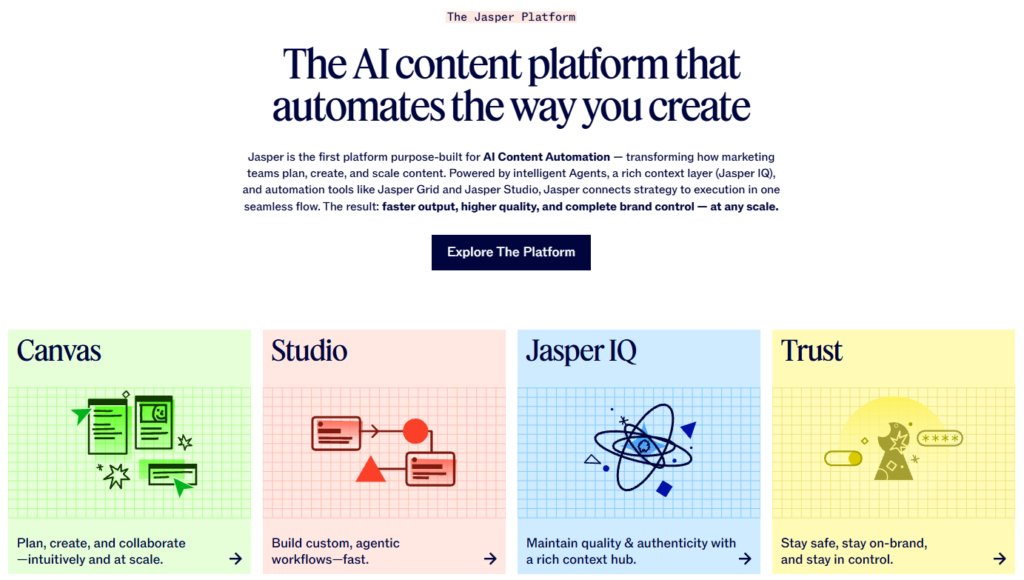
Positioning: Jasper remains the most direct, high-powered competitor for marketing teams that need scale and governance.
Where it beats Copy.ai:
Jasper pivots heavily toward “enterprise performance.” Its primary advantage is the “Jasper Brand Voice,” which is arguably the most sophisticated in the commercial market. While Copy.ai allows for custom voices, Jasper’s ability to adhere to style guidelines across different formats—from white papers to LinkedIn posts—is generally more consistent. It also offers stronger team collaboration features, making it safer for larger organizations worried about data privacy and user roles.
Where it falls short:
It is expensive. Jasper removed its cheaper starter plans long ago to focus on business users. If you are a solo freelancer just needing a few blog posts a month, the ROI might not be there. The interface can also feel bloated with features that a casual user will never touch.
Best for: Marketing teams at mid-sized companies and agencies needing strict brand control.
Avoid if: You are a solo bootstrapper looking for a budget-friendly option.
2. Claude (Anthropic): The Editorial Powerhouse
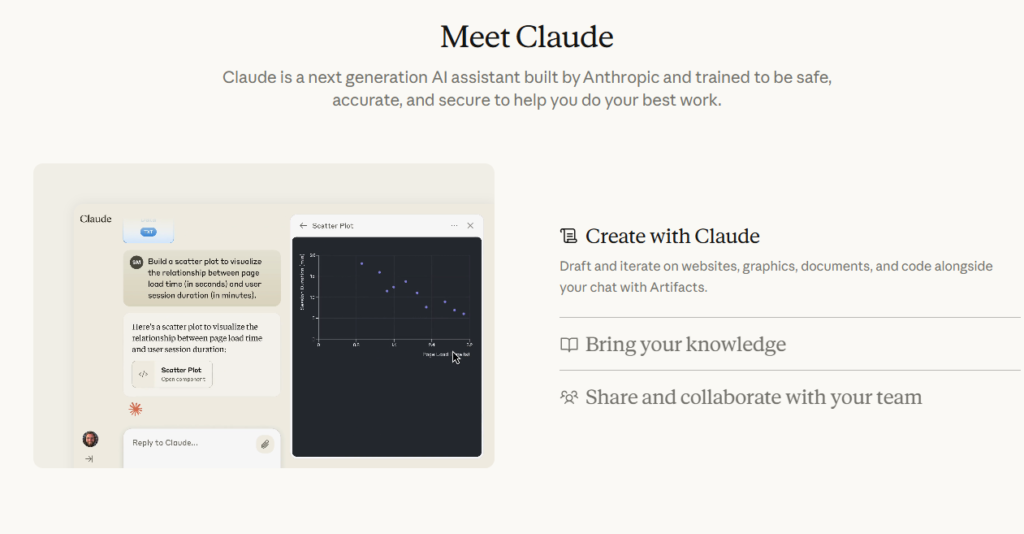
Positioning: Claude isn’t a dedicated “marketing tool” with templates, but it is currently the best pure writer on the market.
Where it beats Copy.ai:
If you value nuance, tone, and readability, Claude (specifically the Opus and Sonnet models) vastly outperforms Copy.ai’s template-driven output. Claude tends to sound less robotic and uses fewer AI clichés (like “In the ever-evolving landscape”). It handles large context windows exceptionally well, meaning you can paste an entire ebook as context and ask it to write a summary chapter, and it will actually understand the full scope of the text.
Where it falls short:
It has zero marketing “scaffolding.” There are no built-in SEO tools, no “Facebook Ad” templates, and no direct WordPress integrations. You are working in a chat interface. You have to be a good prompter to get the best results.
Best for: Thought leaders, newsletter writers, and strategists who want high-quality prose and are willing to prompt it themselves.
Avoid if: You need a “fill-in-the-blanks” experience or direct SEO data.
3. Writesonic: The SEO-First Contender

Positioning: Writesonic bridges the gap between AI writing and SEO optimization, offering a more affordable alternative to the Jasper/Surfer combo.
Where it beats Copy.ai:
Writesonic’s standout feature is its integration of real-time Google data. While Copy.ai has improved its workflows, Writesonic was built earlier with the specific intent of creating ranking content. Its Article Writer 6.0 pulls live competitor headings and keywords before writing, giving you a draft that is structurally sound for SEO from minute one. It generally requires less editing for factual accuracy regarding current events than older template-based tools.
Where it falls short:
The prose can sometimes feel a bit dry or utilitarian compared to Claude or Jasper. It prioritizes SEO structure over creative flair. You will often need to do a “human pass” to inject personality into the intro and conclusion.
Best for: SEO agencies and affiliate marketers focused on volume and ranking.
Avoid if: You are writing creative essays or brand storytelling pieces where emotion matters more than keywords.
4. Scalenut: The “Entire Workflow” Solution

Positioning: Scalenut attempts to replace your entire content stack—research, brief building, writing, and optimization.
Where it beats Copy.ai:
Copy.ai is primarily a writer. Scalenut is a strategist. It creates “Cruise Mode” workflows where it analyzes the top 30 SERP results to build a content brief before the AI writes a single word. It calculates NLP (Natural Language Processing) terms and suggests semantic keywords automatically. For a content manager, this consolidates three tools (keyword research, AI writer, optimization tool) into one subscription.
Where it falls short:
The UX can be overwhelming. There is a steep learning curve compared to Copy.ai’s simple dashboard. Also, like Writesonic, the raw output often leans heavily into “SEO-speak,” requiring editorial cleanup to make it engaging for humans, not just bots.
Best for: Content managers who want to automate the research and briefing phase of production.
Avoid if: You just want to generate quick social media captions.
5. ChatGPT (OpenAI): The Versatile Generalist
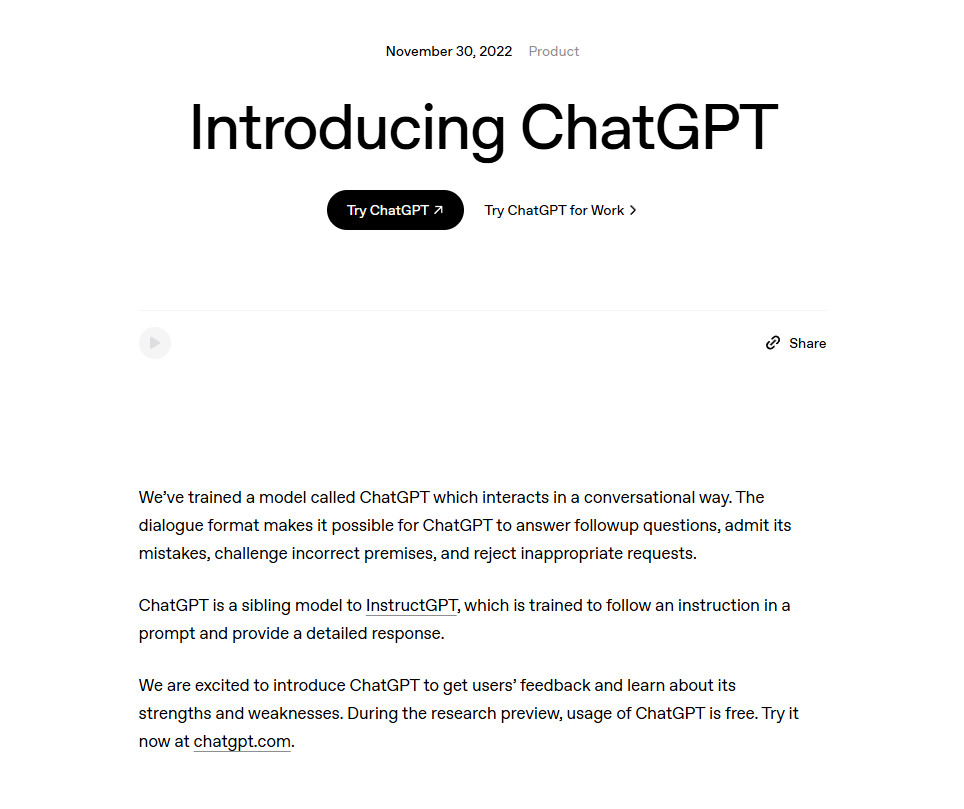
Positioning: The default option for 80% of users, offering the most flexibility at the lowest price point.
Where it beats Copy.ai:
Versatility and cost. For $20/month (or free), you get access to top-tier reasoning models. With Custom GPTs, you can essentially build your own mini-Copy.ai tailored exactly to your business needs without paying for a middleware SaaS subscription. If you know how to structure a prompt, ChatGPT can replicate almost any template Copy.ai offers.
Where it falls short:
It lacks structure. You have to build your own workflows. There is no team dashboard to manage assets, and maintaining a consistent brand voice across different chat sessions requires disciplined prompting.
Best for: Solo founders, tinkerers, and developers who want maximum power and flexibility.
Avoid if: You manage a team of writers and need a centralized platform for governance.
Use-Case Recommendations
Different tools solve different problems. Here is how to choose based on your specific primary goal.
Best for SEO & Long-Form Content: Scalenut or Writesonic
If your primary metric is organic traffic, move away from Copy.ai. You need a tool that understands semantic search and keyword density naturally. Scalenut handles the strategy best, while Writesonic offers a faster path from keyword to draft.
Best for Ads & Conversion Copy: Anyword
While not detailed above, Anyword deserves mention here. It provides a “predictive performance score” for every variation of copy it generates. Unlike Copy.ai, which gives you options and lets you guess which is best, Anyword uses data to tell you which headline is statistically likely to convert better.
Best for Human-Like Editorial Writing: Claude
If you are writing thought leadership on LinkedIn or a newsletter on Substack, do not use marketing-focused AI tools. They sound too salesy. Use Claude. Feed it your previous writing samples and ask it to draft in your style. The reasoning capabilities make it superior for argumentative or opinionated pieces.
Best for Teams & Enterprise Scale: Jasper
When you have five writers and need to ensure they all sound like “the company,” Jasper is the safest bet. The admin features, security compliance, and brand voice enforcement justify the higher price tag for organizations.
Summary: Which Tool Should You Choose?
The market has bifurcated. On one side, you have raw models like ChatGPT and Claude that offer immense power but require manual steering. On the other, you have specialized workflow tools like Jasper and Scalenut that wrap that power in business logic.
Copy.ai sits in a difficult middle ground. It is easier to use than raw ChatGPT but often lacks the deep SEO integration of Scalenut or the enterprise robustness of Jasper.
The Final Verdict:
- Switch to Jasper if you are a marketing leader scaling a team and need brand consistency.
- Switch to Claude if you are a solo creator who cares deeply about writing quality and nuance.
- Switch to Scalenut/Writesonic if your content strategy is purely SEO-driven.
- Stick with Copy.ai only if your workflow relies heavily on their specific “Workflows” automation feature for programmatic content, which remains a unique strength for specific niche users.
For most users in 2026, the best “alternative” is often a specialized tool that goes deeper into your specific vertical, rather than a generalist template wrapper.





Leave a Comment